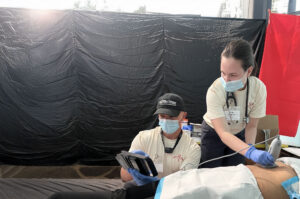

Strengthening PA Training Can Increase Access
The physician shortage is not a new problem, but solutions to the crisis are evolving rapidly. Some proposals may appear effective on paper but risk creating larger systemic issues later; others require thoughtful planning now to secure benefits for decades to come.
The most sustainable solution is to build a fair, stable system that does not rely on ongoing recruitment from resource-constrained regions. The United States can alleviate the physician shortage without drawing doctors away from countries that already struggle to meet basic health needs. A fair system achieves this by fully leveraging a U.S.-trained workforce: physician assistants/associates (PAs).
This approach does not seek to halt the immigration of doctors to the U.S. Instead, it focuses on expanding access to care while maintaining clear, consistent, and trusted standards.
The Global Impact of the Physician Shortage
The physician shortage is a global crisis that affects communities worldwide. Because the U.S. lacks sufficient clinicians, there is a long-standing temptation to fill the gap by recruiting more doctors trained abroad. However, this practice ignores the significant global shortage of health workers.
With approximately 8 billion people and only 14 million physicians, the global physician-to-population ratio is roughly 1.7 per 1,000 people. In many developing nations, this ratio is even lower. When the U.S. recruits from these areas, the loss of even a few clinicians can lead to long wait times, increased travel distances, or a complete lack of care for entire communities.
If the U.S. relies too heavily on international recruitment, the consequences ripple outward, leaving families in those regions without the continuity of care and professional mentoring necessary for a stable healthcare system.
The Role of Physician Assistants/Associates
PAs are specifically designed to address these gaps. Established to tackle physician shortages, PAs undergo standardized training and practice across various specialties and settings—currently, nearly 200,000 certified PAs practice in the U.S.
PA programs meet rigorous national accreditation standards and maintain consistent core requirements across locations. Furthermore, PA students must complete extensive supervised clinical training before graduating and passing national certification exams. If the goal is to mitigate the shortage of clinicians capable of evaluating, diagnosing, treating, and prescribing as part of a healthcare team, PAs represent a ready, available workforce.
Overcoming Regulatory Barriers
Despite this readiness, outdated regulations and payment systems in numerous states continue to exacerbate the physician shortage. Many PA regulations were established decades ago and no longer align with modern healthcare operations. Mandated, outdated supervision structures often create unnecessary barriers, preventing skilled PAs from deploying to the areas where patients need them most.
Modernizing these laws does not disregard the importance of teamwork. Instead, it allows healthcare organizations to tailor roles to a PA’s education, training, and experience. This transition moves away from a “one-size-fits-all” model toward a flexible system that prioritizes patient needs.
Prioritizing Patient Safety and Standardized Care
The overarching goals of any healthcare reform must be patient safety and quality of care. In several states, new legislation has created alternative pathways for some foreign-trained physicians to practice without undergoing the traditional U.S. residency and testing process.
This shift can lead to significant variations in clinician preparedness. Such variation is especially critical in underserved regions where needs are greatest. Individuals with the fewest healthcare choices should not face the highest level of uncertainty about their providers’ training. Unlike these patchwork state pathways, PAs follow a nationally standardized education model with accredited programs and national certification.
Strategic Funding and Team-Based Care
A more innovative funding approach can alleviate provider overload and broaden patient access. The physician shortage stems largely from resource constraints. Given the high demand for primary care, a physician attempting to provide all recommended guideline-based care for an average patient panel would face an unmanageable workload.
Interprofessional teams, including PAs, offer a solution. When teams share the workload, wait times decrease, and face-to-face interactions with providers increase. Solving the shortage requires rethinking how the U.S. funds training. Currently, federal graduate medical education funding remains tied to hospital-based systems, even though most modern healthcare occurs in community settings.
Moving from Theory to Action
Here are practical steps that move from talk to action.
- Modernize PA Practice Laws: Update outdated supervision requirements to enable PAs to practice to the full extent of their education and experience.
Invest in Integrated Care Teams: Support clinics that use PAs to expand access, especially in primary care and underserved areas. - Align Funding with Patient Care: Shift incentives to support community-based practices and interprofessional teams, rather than focusing solely on hospital pipelines.
- Maintain Consistent Standards: Avoid shortcuts in licensing that create uneven training paths and unpredictable expectations for patients.
The physician shortage is an urgent issue, but urgency should not drive the U.S. toward solutions that shift burdens onto other countries or weaken domestic standards. PAs constitute a standardized, scalable workforce ready to address this challenge.
By modernizing laws and aligning funding, the U.S. can expand healthcare access and protect patient safety while respecting the global medical community.
University of Lynchburg: Master of PA Medicine
Prepare to deliver high-quality patient care with hands-on clinical training, close faculty support, and a curriculum built for what modern medicine actually demands.
- Career-ready preparation with extensive clinical education and real-world practice
- Supportive faculty mentorship and strong student resources
- A focused graduate experience designed to build confidence, competence, and compassion
Explore Lynchburg’s Master of PA Medicine Program.